

The bad news . . . that pay-per-mile tax is on the way.
The good news . . . it's not due to come into effect until April/Spring 2028.
It's fair to say that it was the highlight of Rachel Reeves' Autumn Budget announcement, when she confirmed that the pay-per-mile road tax or Electric Vehicle Excise Duty (eVED) will also be applied to plug-in hybrid electric vehicles (PHEVs) as well as fully electric vehicles.
And why have PHEVs been roped into it?
Due to the fact that although they also run on petrol, they can still drive a considerable distance on electric power alone.
When Will Pay-Per-Mile be Introduced?
Electric car drivers and plug-in hybrid car drivers will have to start paying eVED (pay-per-mile tax) from Spring or April 2028.
How Much Will the Pay-Per-Mile Tax Cost Me?
Fully Electric Vehicles (EVs): 3p per mile
Plug-in Hybrid Electric Vehicles (PHEVs): 1.5p per mile
So how much does that translate to per year for the average driver?
Well, if we assume you drive 8,000 miles per annum (that's the UK average), you'd pay £240 per year in pay-per-mile charge if you drive a full EV, or £120 per year if you drive a PHEV.

How Does That Compare to Fuel Duty for Petrol and Diesel Vehicles?
Fuel duty is currently 52.95p per litre.
Again, if we assume you drive 8,000 miles per year, that works out to:
-
Petrol (36mpg): £534.92/year
-
Diesel (43mpg): £447.84/year
Both more than double the equivalent pay-per-mile tax rate for electric vehicle drivers . . .
Plus, fuel duty costs look set to rise from late 2026, and will thereafter face staggered increases.
In other words, electric vehicles are still your wallet's best friend.
Pay Per Mile Tax Calculator
Annual Pay Per Mile Cost
If your expected yearly mileage is different to any of the above, simply multiply it by either the EV pay-per-mile rate (3p) or the PHEV pay-per-mile rate (1.5p), and that's how much you'll pay annually.
E.g. 17,000 miles x £0.03 = £510 per year (or £42.50 per month)
In terms of the pay-per-mile tax, here's how much it would cost you to travel between some major UK cities:
London – Birmingham (118 miles) = £3.54
Liverpool – London (212 miles) = £6.36
Newcastle – Cardiff (327 miles) = £9.81
London – Glasgow (403 miles) = £12.09
Why is the Government Introducing Pay-Per-Mile?
Because the government is losing out on revenue from fuel duty as more and more petrol and diesel drivers make the switch to electric vehicles, which don't face a similar charge. Therefore, the pay-per-mile road tax is intended as a way of balancing things out and making EV drivers pay their 'fair share'.
According to the Office for Budget Responsibility (OBR), the pay-per-mile charge is expected to bring in £1.1bn during the 2028-29 financial year, and £1.9bn by 2030-31.
That figure though is of course based on current forecasts of how many drivers will continue to switch to EVs. It could be that this new tax potentially puts a lot of drivers off EVs, lessening that figure. Chickens and eggs and all that . . .
Will Pay-Per-Mile Replace Road Tax?
No, the pay-per-mile road tax is in addition to standard road tax (Vehicle Excise Duty), which the majority of electric car drivers would have started paying from April 2025.
Will Pay-Per-Mile Be Introduced for Petrol and Diesel Vehicles?
Will eVED also be introduced for petrol and diesel drivers in the future? Could it be a Trojan Horse for worse to come?
The answer is almost certainly not. As we know, petrol and diesel drivers already pay fuel duty, which is essentially a per-mile taxation.
Pay-per-mile isn't an 'extra charge' for electric car drivers. It's a way to level the playing field with petrol and diesel drivers.
Are Any Vehicles Exempt?
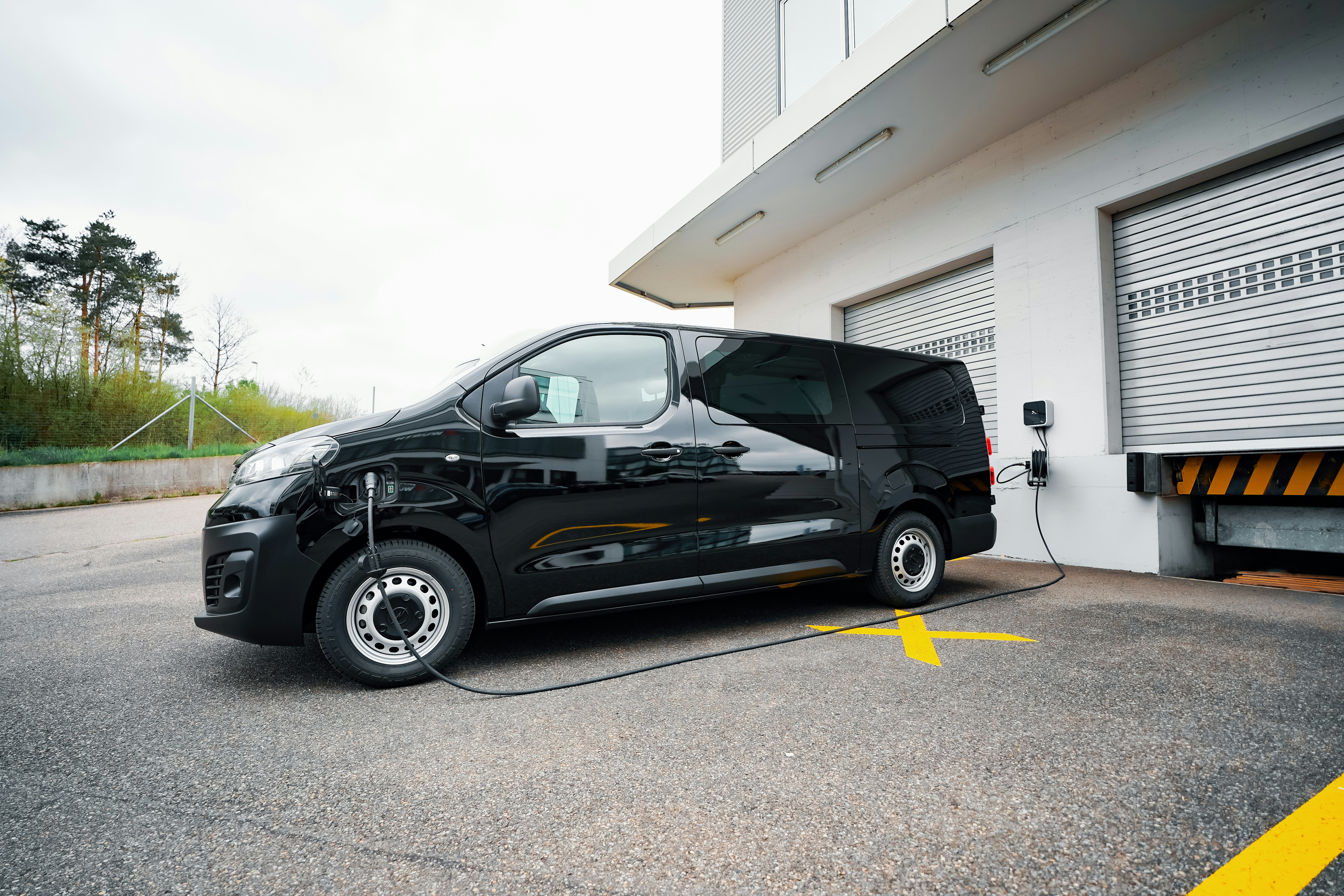
Electric vans, buses, motorcycles and HGVs will initially be exempt from the pay-per-mile charge.
'Initially' being the keyword here, as that could be subject to change in the future.
What Does it Mean for Electric Car Leasing?
The pay-per-mile road tax is still an extra cost at the end of the day, so it's wise to factor it into your future leasing decisions, especially if you're a high mileage driver.
It's now more important than ever to work out roughly how many miles you'll need to drive in a year, even if it's just rounding off to the nearest figure. Then you'll have an accurate idea of how much pay-per-mile will cost you, and if you can afford to stomach it.
One possible good side effect of the pay-per-mile tax is that it could encourage you to choose a lower mileage option than you otherwise might have, in order to keep that pay-per-mile cost low. Some of your short driving trips could be swapped out for walking or cycling.
Regarding electric car fleet leasing, it might be smart to build a small 'cost-per-mile' buffer into your fleet planning. Even so, when you compare it against the fuel cost of running an equivalent petrol or diesel fleet, an electric car fleet is still likely to be the more affordable option.
Because electric vans are exempt from the tax when it launches, electric van leasing will remain just as affordable as before.
You'll still face pay-per-mile charges if you take out an electric business car lease, however. That's because all electric cars will be included in the tax.
How Will Pay-Per-Mile Road Tax be Monitored?
Nobody's totally sure yet about how the pay-per-mile tax will be charged or enforced, partly due to the fact that mileage readings rely so heavily on in-vehicle odometers, which can be tampered with or manipulated.
However, the preliminary suggestion is that it will work in the following 'pre-pay' style:
-
You provide a mileage estimate of how many miles you're going to drive over the next year
-
You pay an eVED figure based on that estimate
-
Your actual mileage gets checked at your next MOT test
-
You're either refunded or charged for how many miles you drove above or below in relation to your earlier estimate
-
Rinse and repeat
Thankfully, the government has confirmed that the above method will not involve installing a tracking device or black box in your vehicle, thus protecting your privacy.
Will the Pay-Per-Mile Tax Charge be Included in My Lease?
Possibly.
In terms of car leasing, it could work in the same way as road tax works now, where the pay-per-mile cost is bundled into your lease in some way and you don't have to apply for it separately. That's because the leasing company is classed as the 'registered keeper' of the vehicle (you don't own it, after all).
Summary
Although the upcoming pay-per-mile road tax represents an unwelcome extra expense, it's likely not going to seriously impact costs. Despite the pay-per-mile tax, EVs and PHEVs will likely remain more affordable than petrol and diesel cars for the average motorist in the foreseeable future, especially if you have access to the cheaper charging rates offered by home chargers. And the new tax is still a long way away.
Explore Electric Car Leasing
Still interested in leasing an EV?
See the best electric car lease deals
See the best plug-in hybrid car lease deals
FAQs about the Pay-Per-Mile Road Tax
How much is the pay per mile road tax?
From April 2028, drivers of battery electric vehicles (EVs) will pay 3p per mile, whilst drivers of PHEVs will pay 1.5p per mile.
Will pay per mile car tax happen?
The UK government announced that the pay per mile tax is set to be applied in April 2028, though there is still a chance that it could be delayed, altered or even scrapped, especially in light of the criticism against it, or if there are worries that it won't meet climate targets.
How would pay per mile be tracked?
The finer details of how the tax will be applied are still being determined, partly due to the fact that vehicle odometers (which track the mileage) can be manipulated and tampered with. One of the options being considered is a pre-pay option whereby you'll estimate how many miles you'll do, then pay for it in one lump sum. For electric car lease drivers, it's possible that the pay per mile tax could be bundled into your payments.
Would pay per mile be instead of road tax?
The pay per mile charge for EVs and PHEVs will be in addition to standard road tax, rather than replacing it.
Will the pay per mile rates stay the same?
The pay per mile rates will not stay the same. The charges are expected to increase annually from 2029-30, in line with Consumer Price Index (CPI) inflation.
Are electric vans exempt from pay per mile?
Yes, electric vans will be exempt from the upcoming pay per mile road tax charges. So if you drive an electric van or lease an electric van, you won't have to pay per mile when the tax is introduced in Spring 2028 – offering continued savings.
Will hybrid car drivers have to pay per mile?
Regular self-charging hybrids will not be affected by the pay-per-mile charge. However, if you drive a plug-in hybrid electric vehicle (PHEV), you will pay a discounted rate of £1.5p per mile from April 2028 (compared to £3p per mile for full EVs).